Thursday, August 10, 2006

Santa Fe, Iguazu Falls and Misiones


The magnificent Iguazu Falls are well worth the two-day dash from the moderate, very European climate of the capital to the tropical sultry abundance of Misiones, the province where the falls are situated. The elevated eight-lane speedway stops abruptly after Rosario and from the sophisticated Southern Europe-esque urbanity you descend into rural Latin America. It is not bad as it sounds: the traffic is light and the roads are well maintained.


We overnight in the next city on our way, the provincial capital Santa Fe de La Vera Cruz. It sits in the midst of a huge flat area, dominated by two mighty rivers: Paraná and Cayastá. The abundance of water makes sure that there is enough grass for the millions heads of cattle and horses raised for meat and milk here, the source of prosperity for local people, but there is a dangerous side to this. The year before we came, the whole city was flooded in the matter of just a few hours after torrential rains had swollen the rivers. Many areas stood under water for a week, the damage was devastating. As we walk in the streets, on every building wall you could see the marks of the water level at the time of the flood. Many were restored but quite a few were still left buried under rubble.

As elsewhere in Argentina, many central streets in Santa Fe are pedestrianised. Brightly lit-up and abuzz with casually smart crowds at night they are the centre of social life here. Many shops are open until 10 and most restaurants and bars are open well into the wee hours. There are no gangs of rowdy males making noise or constellations of binge-drunk females sleeping on street benches in their own vomit like in London or Dublin though. Latin drinking culture is of moderate enjoyment that accompanies copious meals.

Next morning we cross the Paraná through a subfluvial tunnel - that is a tunnel dug under a river . We emerge on the other side in the city of Paraná and get completely lost: there are no signposts and my 5 -day-old Spanish is enough to ask for directions but not understand them. Encouraged by my clear enunciation (I can parrot almost any sound) locals most accommodatingly erupt into detailed explanations of which I understand precious little. We follow more their energetic gestures than what they say and after long two hours we finally hit the right road. The journey goes on.
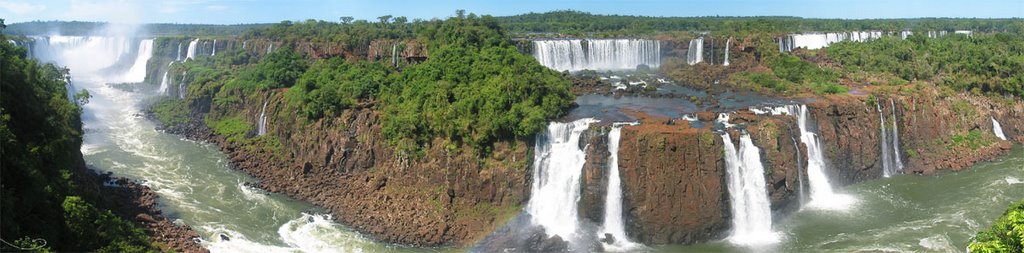

The Niagara may be larger in volume but the Iguazu makes good in sheer spectacularity: the multitudes of roaring cascades spread out over a long precipitous bend grown over with lush vegetation, the thunderous Garganta del Diablo ("Devil's Throat"), all crowned with a cloud of water mist rising 100 meter high.

A true feat of ingenuous engineering, the sprawling network of sturdy steel walkways allows you to walk under, over, across, through and behind the waterfalls in a kind of touristic Kamasutra. If that is not enough, you can take a bumpy speedboat ride inside a cascade - and you won't really know how you got wet! There is even a beach where you can cool yourself in the water whilst enjoying the dramatic backdrop. High tea at the nearby Sheraton is a nice way to finish the day without losing the falls completely out of sight.

For a change from the noisy water falls, we went to San Ignacio Mini - the Baroque ruins of a Jesuit- managed self- contained commune, complete with a canteen, school, workshops, penitentiary and cemetery. In the 17th century Guaraní Indians led by Spanish monks were studying there Latin, arithmetics and the Bible while working 6 hours a day making watches and building a 74-meter-tall cathedral in the middle of the wild jungle, thus escaping for a while extermination by the conquistadors. It was a somewhat condescending project aimed at civilising the "poor savages" but it did - if only for a while - save thousands of people from the horrors of slaving at sugar plantations. The ruins remaining today are a poignant monument to human idealism in this cruel world.

***

A short drive from the falls there is a place where you can stand in Argentina while seeing Paraguay to your left and Brazil to your right across the river. Ciudad del Este on the Paraguayan side is reputedly the world's capital of trade in pirate goods but we are too tired from a day walking in scorching sun. It is time for some steak, wine and ensalada mixta, the omnipresent side order. Argentinians are notorious for their protein-rich diet and I understand why: there is no more flavourful and succulent beef anywhere else in the world. All cattle here is free-range, raised on wild grass and fresh water and any fodder enhancers and steroid injections are not allowed.

Paraguay is also the name of a wide and muddy river. There is a string of spacious camping sites on its shores. Red-earth beaches naturally equipped with barbecue ovens - this is Argentina! - are quite a sight to marvel, even if just for the vivid colours. The river bottom covered in thick grass is a bit eeky but the water feels like warm milk, enveloping you in soothing warmth!

***


Salta The Beautiful & The Andes >>>


++++++++++++++++++++++++++++++++++++++++++++++++++

Buenos Aires - San Isidro - Santa Fe - Iguazu Falls - Eldorado - San Ignacio - Corrientes - Resistencia - Salta - Cafayate - Tafi del Vale - San Fernando del Valle de Catamarca - La Rioja - Ischigualasto - Talampaya - Capilla del Monte - Villa San Juan - Córdoba - Pilar - Buenos Aires


Buenos Aires - More Old World Than The Old World Itself

When you land in Buenos Aires after a 14-hour flight mentally braced for the proverbial Latin American deal, you are in for a quite bizarre, alternative universe kind of experience. You find yourself in Mediterranean Europe but with a twist. As it goes, your brain first picks the familiar and only a little while later the differences start dawning on you.

Laid back but efficient, Buenos Aires is a snazzy if a little faded mix of Barcelona and Milan with a princely dollop of Paris. There is no shortage of space in the New World, so the city is laid out generously. Its central thoroughfare, the 24-lane Avenida de Nove Julio is world's widest street and the enormous Teatro Colón that takes up a whole block is world's largest, seating a whopping two and half thousand.


Founded as early as in 1536 - just four decades after America was discovered - Buenos Aires has ever since been cultivated as a piece of the Old Country transplanted over the Atlantic. Every European architectural trend can be found here: Baroque and Neo-Classical cathedrals, Spanish colonial mansions, grand Art Nouveau buildings, Art Deco high-rises and a few obligatory Corbusier-influenced monstrosities. Until WWI Argentina was world's third richest country, and the opulence of those days is imprinted of its capital's grand architecture.

The wish to be as European as can be even led to some excesses when indigenous flora was mercilessly weeded out to give way to chestnut and poplar trees painstakingly imported across the ocean. Luckily, the city fathers came to their senses and lush jacarandas, ombús and eucalipti give the grand boulevards and resplendent plazas of this fast and glamorous metropolis the exotic look that, considered the location, it deserves.

Porteños may speak Spanish but it is mostly Italian blood that pumps through their veins. Brisk and lucid, the local Rioplatense dialect sounds a delightful Italian staccato. Even McDonald's joints here have café sections where tiny cups of powerful aromatic espresso are served with fine cakes. But never is the indulgently hedonistic Mediterranean heritage more evident than
every day at about 9 PM when the city comes abuzz with smartly dressed urbanites pouring out into the streets looking to quench their appetite for steak and wine, never-failingly superb here. Coincidentally, it is the same crowd that employs world's second largest army of shrinks (after New York) and plastic surgeons (after LA).

There is something nostalgic about this city, a poignant flavour of half-forgotten dreams of an era gone by. Unscathed by both world wars and largely untouched by the excesses of post-modernity, Buenos Aires is what Southern Europe might have become without the Marshall Plan and EU directives. Its Subte - the underground system adorned with colourful Art Deco panneaux - is world's cheapest time machine . Two pesos deliver you straight into the Roaring 20s. The creaking carriages with the interior of leather handles, vintage mirrors and polished wood are the same that took around Cortazar and Borges around the oldest metro in Latin America, the Southern Hemisphere and, for that matter, the entire Spanish-speaking world. Sadly, they are being slowly but surely phased out by fast and cushy but faceless Japanese-made trains.

***

Iguazu Falls & Misiones >>>


++++++++++++++++++++++++++++++++++++++++++++++++++


Buenos Aires - San Isidro - Santa Fe - Iguazu Falls - Eldorado - San Ignacio - Corrientes - Resistencia - Salta - Cafayate - Tafi del Vale - San Fernando del Valle de Catamarca - La Rioja - Ischigualasto - Talampaya - Capilla del Monte - Villa San Juan - Córdoba - Pilar - Buenos Aires


Wednesday, July 26, 2006

In The Land Of Whimsy: Prague and Karlovy Vary


Czechia happens to be the official name of the Czech Republic, even though few people are aware of it. In the recent years Prague has become the proverbial tourist Mecca. At 90 euros all-included return, we decided to follow the herd and visit the city of Hašek, Čapek and Kafka. Three hoorays to SmartWings - the only budget airline that serves free food and drinks!


Prague

T
here have been written so much about Prague so I will just recap the nicest and the weirdest we have encountered.

Many other cities shut their opera houses for the summer, but in Prague Mozart's Don Giovanni is staged every day to cater to the never-ending tourist crowds. It is quite a nice and polished performance in the theatre where it premièred back in 1787. In a suburb on the other side of the Vltava is the house where Mozart wrote it. We went to both to round off the experience.

Outside the city, in an unassuming neighbourhood is the resplendent Troja Palace with an exuberant Defeat Of The Turks ceiling fresco. Renaissance arrived to Czechia early thanks to it being a part of the Holy Roman Empire. Architectural idea travelled faster inside the Western world and the Troya Palace is a good proof of that. In the basement an oenotheque is dedicated to promoting Bohemian and Moravian wines. Made from mostly Riesling and Grüner Veltliner, they are very Germanic in style: light, sweet and aromatic.

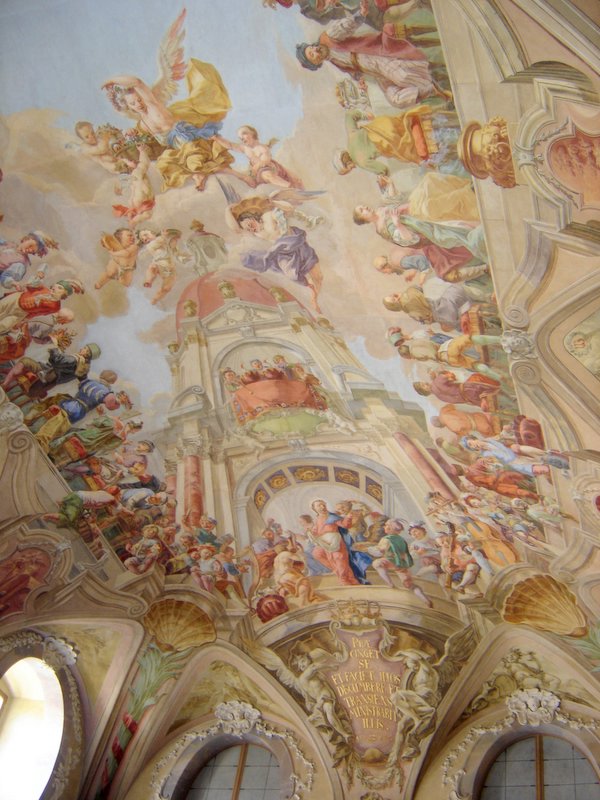
Right across the road from it is the Prague Zoo: it is not on a grand scale but very nicely presented. Two years after a devastating flood, it seems to have recovered very well. Most memorably we saw fruit bats gorging on bananas in the dark; mating giant turtles (oh, the GRUNTS and MOANS!); and a close-up of dozing tiger's. Back in the city, nearly equally nice is the Strahovsky monastery with the remarkable ceiling fresco of Christ's Feast With The Righteous.

He's a fictional character alright but it was a huge kick treading in the footsteps of good soldier Švejk: namely the U Kalicha restaurant that he "frequented". The book is very big in the German and Russian-speaking worlds but remains relatively unknown to the Anglo-Saxons. It is considered to be the first anti-war novel ever written but its virtues are not limited to that. The author, Jaroslav Hašek
was part of the big, if at times tragic, adventure of WWI - Czechoslovak Legions. The story of brave and enterprising people caught in the chaos of revolutions, collapsing empires, ideologies and wars but never giving in to circumstances is one of the most inspiring adventures I have read about.

Boat trip on the Vltava river was good fun: three and half hours of unrushed sightseeing and energetic jostling for buffet food with two hundred other tourists. At the end of the day everyone was full if a tad roughed up and battle-weary. The lush colours of the twilight over the Vltava made good for it all.

No place is without a bad apple: horrible modern art in Prague is concentrated around the Wenceslas Square and Vysehrad. This is how being a part of the Western world can at times backfire.


Karlovy Vary

A few hours by coach took us to the Old World splendour of Karlovy Vary where everyone apart from waiters and sales clerks appears to be from Russia. During the heady days of Yeltsin's rule, New Russians discovered that it was safer to invest in property abroad than to keep the money in the country. In the early 90s up to 80% of realty market in Karlovy Vary was taken over by shady characters from the East. They went as far as to building their own airport with daily flights to Moscow.

More known as Carlsbad in the English-speaking world, Karlovy Vary is a very posh and twee spa resort, where even dog kennels are Art Nouveau. Jugendstil extravaganza permeates throughout the whole town. There is a whole neighbourhood of splendid Art Nouveau villas (see the slideshow just below). The legacy of Austro-Hungarian religious tolerance lives in fine Russian Orthodox, Catholic and Anglican churches.


There is more to these town than fine buildings and healing waters. As it goes, behind pretty façades hides tragic history. Historically, Karlovy Vary lies in the Sudetenland, an area for centuries dominated by ethnic Germans. Upon the collapse of the Austro-Hungarian Empire, the town was made a part of newly created Czechoslovakia and given its present Slavicised name. Protests by local residents were violently suppressed by Czech police forces. The rise and defeat of Hitler's Germany brought about more mutual ethnic cleansing in the area. Currently, Karlovy Vary is well established as a Czech town but there still seems to be quite a bit of bad blood going on.

Karlovy Vary happens to be a major celebrity destination, the visitors list is a Who Is Who In Culture, Politics and Science during last 200 years list : Mozart, Marx, Paganini, Schiller, Wagner, Chopin, Brahms, Dr. Pavlov, Freud, Kafka, Hitler, Mary Pickford, Douglas Fairbanks, Atatürk, Yuri Gagarin, Henry Fonda, Jackie Chan, Leonid Brezhnev to name just a few, as well as a whole assortment of royal personalities from Ethiopian emperors to Japanese princesses. Beethoven and Goethe used to have walks here together much to the glee of the residents.


This trip finally shattered my illusions of Pan-Slavism. They are just that: illusions. There is no reality to back it up except for linguistic relation. There is precious little culturally connecting Czechs, a Holy Roman Empire Nation, jolly Mediterranean Croats and imperially inclined Orthodox Russians. It is no coincidence that Bulgarians elected themselves a German king right after the Russian army delivered them from Turks in 1878.


Tuesday, June 27, 2006

Austro-Hungary 2006 - In The Wake Of A Bygone Realm

Pro's: Landscape diversity, great climate. Hot springs, castles, scenic routes, fine wining and dining everywhere.
Con's: Can't think of any.
In a nutshell: Four very different, very rich cultures within a few hours by car from each other.

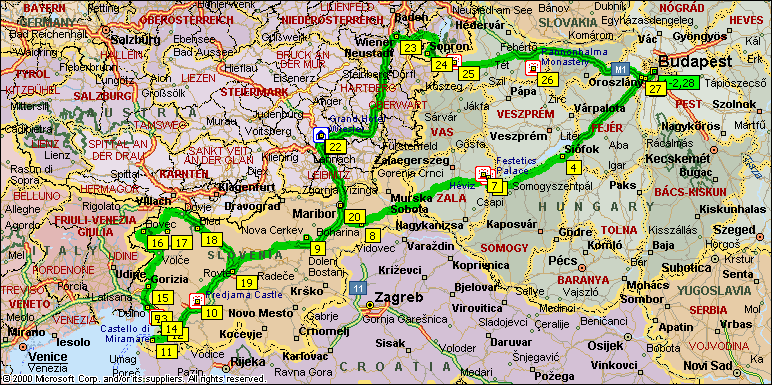
From the Danubian exuberance of Budapest via the pristine Alpine scenery of Slovenia to the restrained elegance of Trieste and back by way of the northernmost Italian Renaissance city, Graz: our hardy Suzuki Ignis took us 2,500 km through the mountains and plains of the former Austro- Hungarian Empire to Hungary, Slovenia, Italy and Austria.

For over half a millennium, it all used to be one country, Europe's second largest, a European superpower, now but a name from a history textbook. Like Paris in the West, Vienna used to graciously preside over the Central European civilisation, reaching with its influence across distances and cultures. It was too busy managing its multi-cultural citizenry to endeavour an overseas expansion so the only far-flung parts of the empire were a tiny concession in Chinese Tianjin and Franz-Josef Land in Antarctica.


The high culture of the Viennese court percolated to Austrian dominions and beyond, softening mores, refining lifestyles and popularising such social staples as coffee, opera, ballroom dance, baguette, croissant, psychoanalysis and Jugendstil. Of fine wines - a sure sign of a mature hedonistic culture - the area has a lot, even if, undeservedly so, hardly with an international acclaim.


For centuries, Austro-Hungary kept steadily gaining political and territorial weight. The mostly peaceful expansion - the Hapsburgs prefered dynastic marriages to warfare - continued until it choked on Bosnia and Herzegovina in 1914 taking down the whole world with it in the whirlpool of WWI.

Nothing was the same after that. The empire tumbled like a house of cards, leaving in its wake a string of independent states, each with its own identity, yet still bearing signs and vestiges of the common past. This is what we went on search in the summer of 2006, enjoying along the way Mitteleuropa's best of worldly pleasures: food, wine, theatre, hot spring spas and the beauty of its cities and countryside.


Highlights of the trip:


Budapest - Figaro, Turkish Baths & Synagogue

Hungarian Countryside - Wine, Hot Springs & Palaces

Slovenia - Ljubljana, Triglav Mountains & Adriatic Coast

Italy - Trieste, Miramare Castle, Nudist Beaches

Austria - Opera In The Northernmost Italian Renessaince City


+++++++++++++++++++++++++++++++++++++++++++++++++++++++++++++++++
Budapest - Szentendre - Siófok - Keszthely - Hévíz - Ptuj - Nova Cerkev - Celje - Predjama - Trieste - Duino - Izola - Gorizia - Bovec - Bled - Ljubljana - Maribor - Graz - Sopron - Fertöd -Törökbálint - Budapest

Monday, June 26, 2006

Graz - The Northernmost Italian Renaissance City


We did Graz pretty much on the run. Considered the time we had, we still accomplished quite a bit. Miraculously, despite the midst of the summer the opera had shows on - Umberto Jordano's André Chenier was starting in just about an hour. Frothing and panting, we rushed to the hotel to change from the hiking shoes and cargo shorts into fine tailored suits we luckily had in the hotel. You don't want to look shabby in an Austrian opera house.


Instead of a swish pre-opera dinner, we had to make do with crackers and juice in the car desperately trying to cool down in the air-conditioned air - but it turned out well worth it all. Often, opera singers take my fancy for the sheer technicality and power of their voices but this time the tenor and soprano protagonists' were far beyond that, they were ripping my heart from its very bottom, making me well up and carrying me away on the wings of their inspiration. 'Whoa, if they sing like this in the province, what is it like in Vienna then, whoa whoa whoa!', thought yours truly in bewilderment. Well, well, well, they both turned out to be Russian.


Graz stands on the watershed of the Mediterranean and Alpine Germanic zones. Geographically, it is closer to the latter but through the efforts of its feudal sovereigns a great number of Italian architects took part in creating the cityscape that we can enjoy today. One feature that signifies this cultural marriage are the ornately adorned buildings you can see here and there, covered with the cross of Italians sgraffito and Bavarian lüftlmalerei.


Amongst the red shingle rooves of comely burger houses sits something that looks like a discarded tumor of a giant alien. Organically shaped, weirdly coloured and covered with what appears as suction cups - it is the Kunsthaus Graz, the Museum of Modern Art. Its aesthetic virtues may be contestable but the novelty factor is definitely there. It serves the city wishing to cast its boring petit bourgeois image quite right. Most of all, it reminds of pierced nipples on a middle-aged accountant, married with three children.


Slovenia - Triglav, Ljubljana, Bled & the Adriatic Coast

Slovenia is a peculiar little country with magnificent nature and a high standard of living - a Switzerland on the Adriatic. Just like Switzerland it knows division on the linguistic basis - the balmy coastal areas, once Venetian possession, are Italian-speaking while the Austrian-influenced Alpine inland is, surprise, more German-speaking. That is not to forget about the national language Slovenian, which to me sounds somewhat akin to the word usage of 8th century Russian epic stories - bylinas.

Back in Austro-Hungary, the chancellor would show up at a parliament meeting with not such a thick book containing the whole body of Slovenian literature to prove his point that education in national languages is, well, pointless, but nowadays Slovenian is a language in its own right.


You can see the Italianesque-Germanic cultural division
in the food, architecture, even people's facial types as you travel through Slovenia.

  • the twee Slovenian town of Ptuj with its highly decorative churches and Jugendstil apartment buildings;
  • a night at a 700-year old (still functional) mill in Slovenian mountains - sampling herbal spirits with the miller and having breakfast on the terrace (trying my macaronic Slovenian on our host was also fun - the lingo is not unsimilar to the language of Russian heroic fables from about 1,200 years ago!)
  • the Predjama Castle built in a cave;
  • rustic scenery on Slovenian byways;
  • fish platter on a very Venetian piazza in Izola, Slovenia;
  • the gentle coastline and Italianesque villas of Slovenian Adriatic;
  • driving through a mountain passage at 1,611 meters above the sea level;
  • frolicking on a glacier, spotting waterfalls and vantage viewpoints, sunbathing, admiring the alpine flora and fauna, drinking crystal clear water in the stunning Triglav National Park in the Julian Alps;
  • Slovenian mountain villages;
  • the way too photogenic Bled Lake;
  • Slovenian Culture Festival and night lighting in Ljubljana;
  • a basketful of wild strawberries at a Ljubljana fresh market;
  • huuuuge Slovenian lunches and equally huge Slovenian dinners;
  • the picturesque city of Maribor that boasts world's oldest grapevine;


Free Port Trieste and Miramare Palace


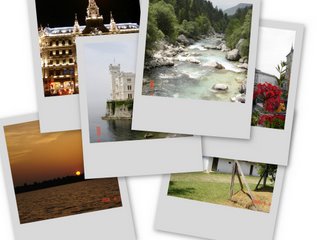
Trieste has been an Austrian city for over five centuries, the only maritime access of the empire that never bothered to acquire overseas colonies. Briefly occupied by Venice and France it grew into a flourishing free port populated by a multicultural melange of nations. Italians, Slovenians, Austrians, Croats and Hungarians contributed to a vibrant atmosphere of creativity and prosperity on the balmy Adriatic shores.

The faded elegance of the city has a distinct Austrian flavour with delightful Italianate and Southern Slavic touches. There is no way of seeing the seams in this harmonious blend: how would you separate a stately Viennese-style coffee-shop from its lovely terrazza? Trieste's magnificent piazzas equally combine the Austrian gravitas with the Italian bellezza. The sky-blue Byzantine domes of the Serbian Orthodox Cathedral grace the bank of the Grand Canal lined with scores of open-air restaurants. On the This city may not have world-class attractions but the whole deal is so enjoyable that the more you walk around the more you feel like staying here longer.

Just outside the city is the Castello di Miramare, a graceful Italianate castle has a mysterious history of great aspirations and tragic ends. It was the favourite residence of Maximillian I, the fine Emperor of Mexico executed by Mexican rebels after a short reign. His wife later succumbed to insanity here unable to cope with her grief and was dispatched back to her native Belgium. Archduke Ferdinand stayed here on the way to Sarajevo where his assassination triggered the star of WWI. The dashing Prince Amedeo d'Aosta, who made home here after the war, went on to become the Viceroy of Ethiopia only to die in a Kenyan POW camp a few years later.

It is not all gloom and doom though, the serene coast hosts a well hidden but immensely popular nudist beach along the Viale Miramare. This rugged terrain may be the only known place where modern incarnations of Roman gods can be viewed in the buff.


Hungarian Countryside - Wine, Hot Springs & Palaces

Most visitors to Hungary do not venture beyond Budapest or, at times, the Balaton. A real waste, because Hungarian countryside is a delight. With good roads and varied landscape, you are in for many an enjoyable surprise here: former landowners' palaces, hot springs where you soak full-body in hot mineral water, pretty villages on undulating hills, vineyards, lovely roadside restaurants, akin to the French rustic auberges. The language may be a doozie, but everything can be solved with body language and a phrasebook - I swear by mine!


Just a few things we enjoyed on our countryside drives in Hungary:

  • soaking in the 4 square kilometers of radon water of the world's largest thermal lake in Hévíz;
  • kicking back in the Hungarian Baroque town of Keszthely;
  • lavish wild game dinners at the Bacchus Restaurant (things like deer's leg in blueberry sauce!);
  • staying 2 nights at the Wine Museum;
  • the gracious Festetitcs Palace and its peaceful park;
  • boat trip, midday dips and the sunset on the Balaton Lake;
  • visiting Imre Kálmán's hometown of Siófok;
  • driving around in the
  • Hungarian countryside full of undulating hills, windmills, white chapels, tranquil rivers, red-roof and thatched houses, wine cellars and hot springs;
  • the magnificent Esterházy Palace which would not be out of place somewhere in France;
  • the twee town of Sopron and savoring scrumptuous Hungarian cakes on its main square;
  • garlic soup served in a bread bun

  • ***


    +++++++++++++++++++++++++++++++++++++++++++++++++++++++++++++++++

    Budapest - Szentendre - Siófok - Keszthely - Hévíz - Ptuj - Nova Cerkev - Celje - Predjama - Trieste - Duino - Izola - Gorizia - Bovec - Bled - Ljubljana - Maribor - Graz - Sopron - Fertöd -Törökbálint - Budapest

    Budapest - Figaro, Turkish Baths & Synagogue

    Figaro the opera, Turkish baths and Synagogue epitomize the exotic mixture of various cultures in the capital of the kingdom that once majestically spread from the Ukraine to the Adriatic.


    Hungarians themselves , with their distinctly different ancestry and language, are a European curiosity of sorts. In the course of their volatile history they managed to absorb many foreign influences to end up branded 'Italians of the North'. Wine-loving folk with a strong musical heritage, passionate about food and their national identity, their brand of joie de vivre is a bit of the ponderous and even somewhat phlegmatic Finno-Ugric kind, unlike the sunny French disposition or the studied imperial elegance of the Austrians.


  • Le Nozze Di Figaro at the Budapest Opera;
  • dinner at Mofarguru - the restaurant with Europe's largest menu - finished with a surprise dessert;
  • 1000 Years Of Hungarian History exhibition at the National Museum;
  • going Jewish (well, just trying on yarmulkeh) in Budapest's synagogue (Europe's largest) with the interior so lavish you'll think you're in a palace;
  • ridiculously overpriced yet) delicious cakes at the over-the-top New York Coffee House with enough gold decorations to pay off the debt of a small African country; the restaurant and the lobby of the adjacent hotel are just as mind-numbing;
  • men-only Turkish thermal baths built in 1561 and full of hot mineral water and, well, naked dudes;
  • lazying around in the Varosliget Park;
  • Hungarian Millenium Fountain and the Országház Building;
  • daytime and nighttime walks through Budapest;
  • ridiculously overpriced yet delicious wild berries parfait on Vaci Utca in Budapest;
  • the Budapest Gay Pride overspill parties

  • ***


    +++++++++++++++++++++++++++++++++++++++++++++++++++++++++++++++++
    Budapest - Szentendre - Siófok - Keszthely - Hévíz - Ptuj - Nova Cerkev - Celje - Predjama - Trieste - Duino - Izola - Gorizia - Bovec - Bled - Ljubljana - Maribor - Graz - Sopron - Fertöd -Törökbálint - Budapest


    Thursday, May 18, 2006

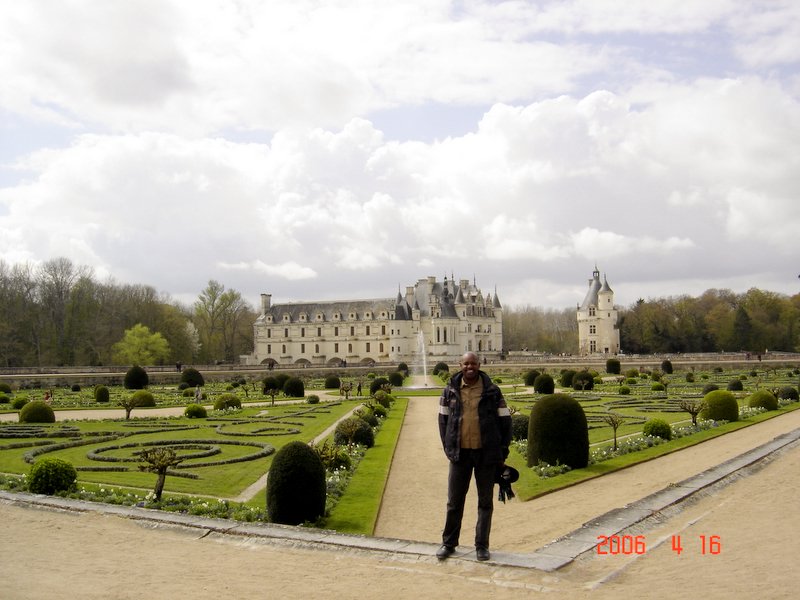
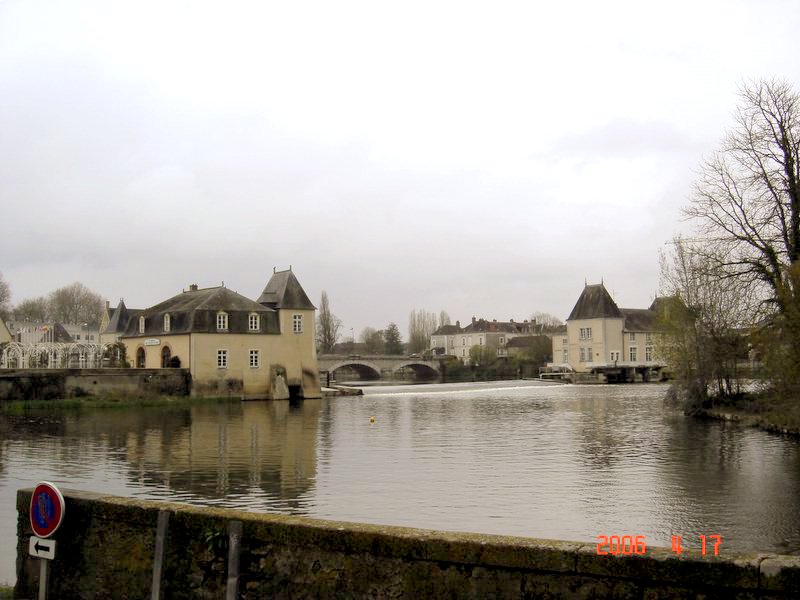
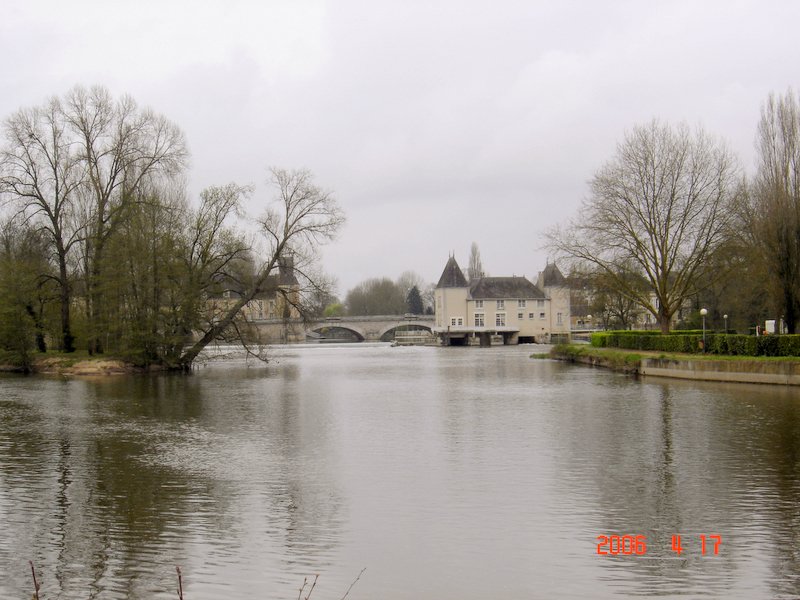
    Easter In The Loire Valley - France 2006


    Easter’s pre-Christian roots are in celebrating the beginning of the warm season. This is when ancient farmers’ year used to begin. The English word “year”, the German “jahr”, the Russian cognate “yaro” all refer to the spring. It is also the reason why the ninth month’s name, September actually means “the seventh” as the Roman calendar also started in the spring. The celebration of the Sun’s return to longer shifts in the sky, the resurrection of the Sun god, dates back to Pharaonic Egypt.

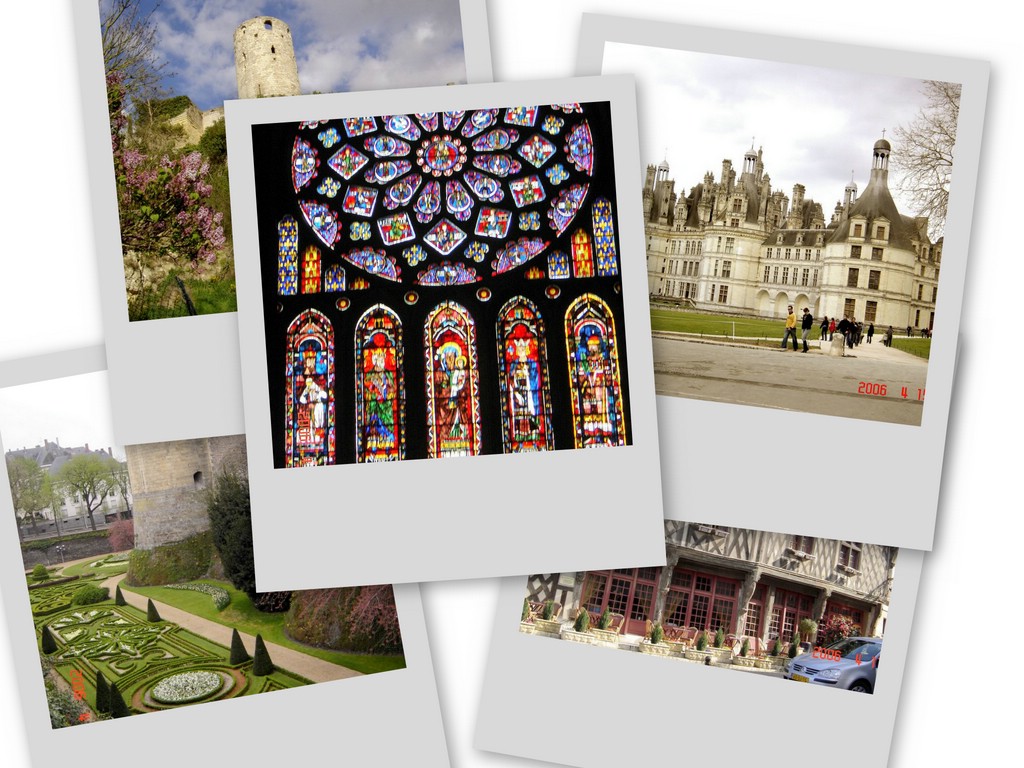
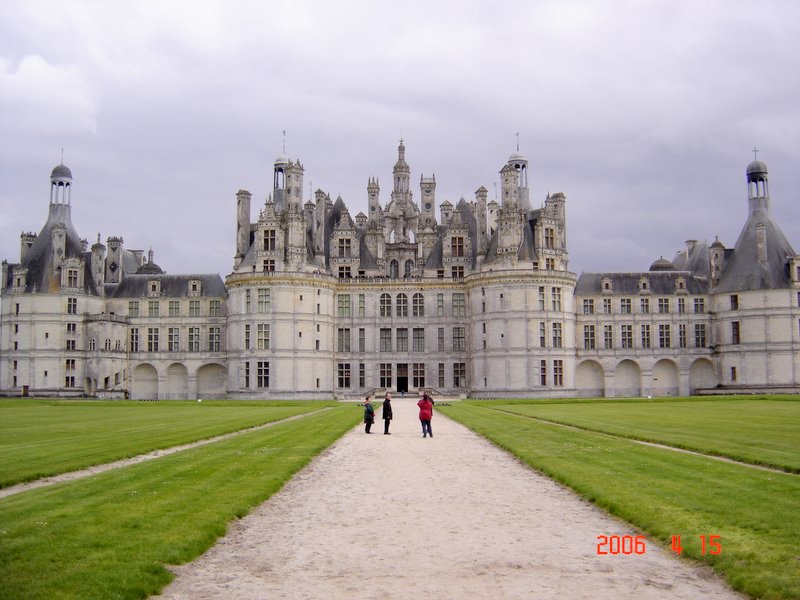
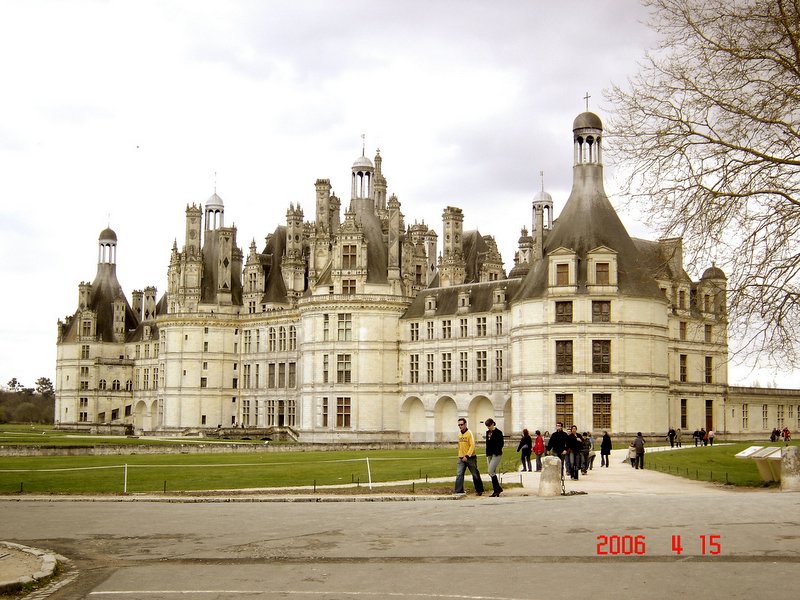
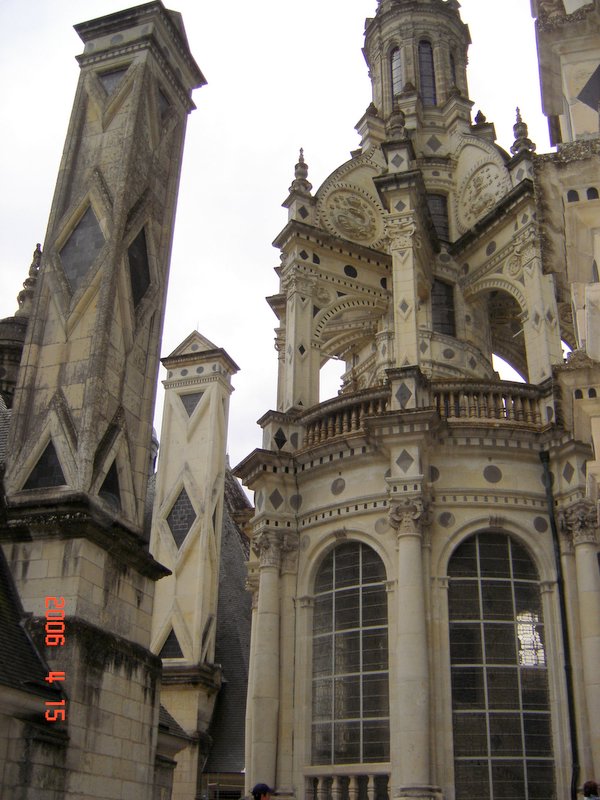
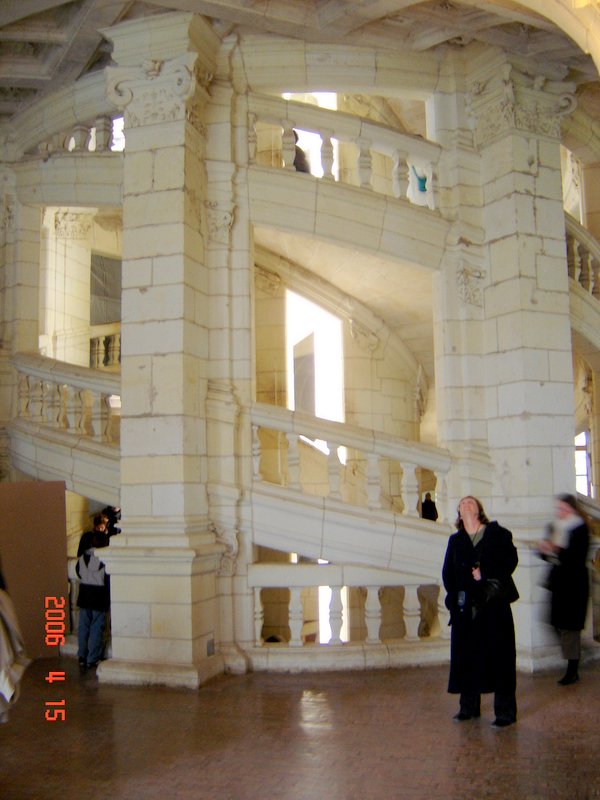
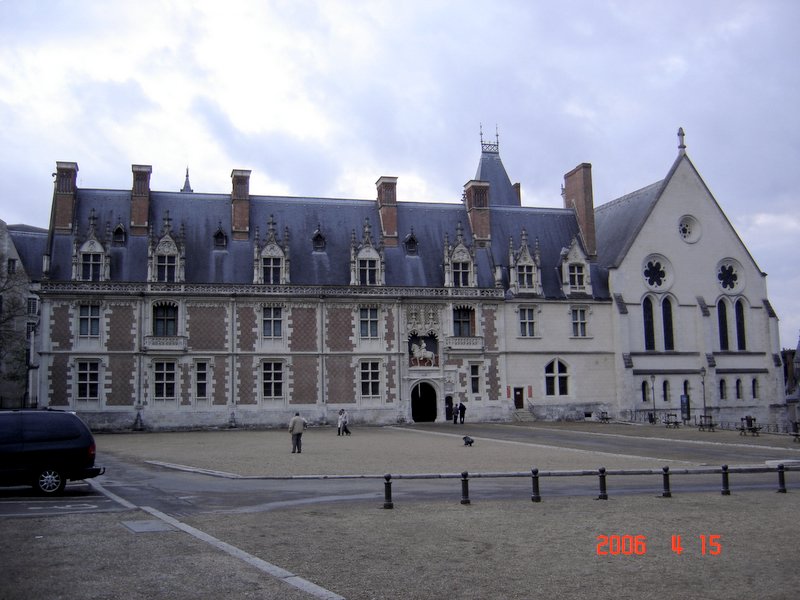
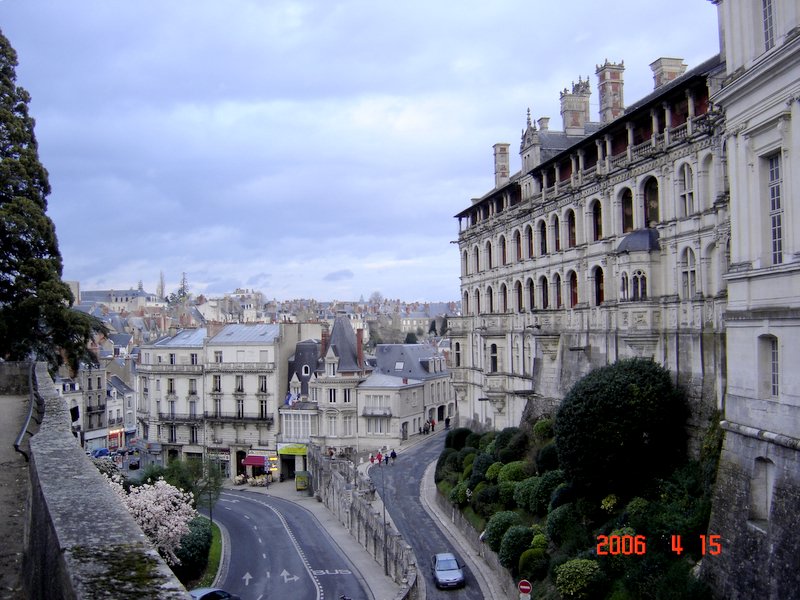
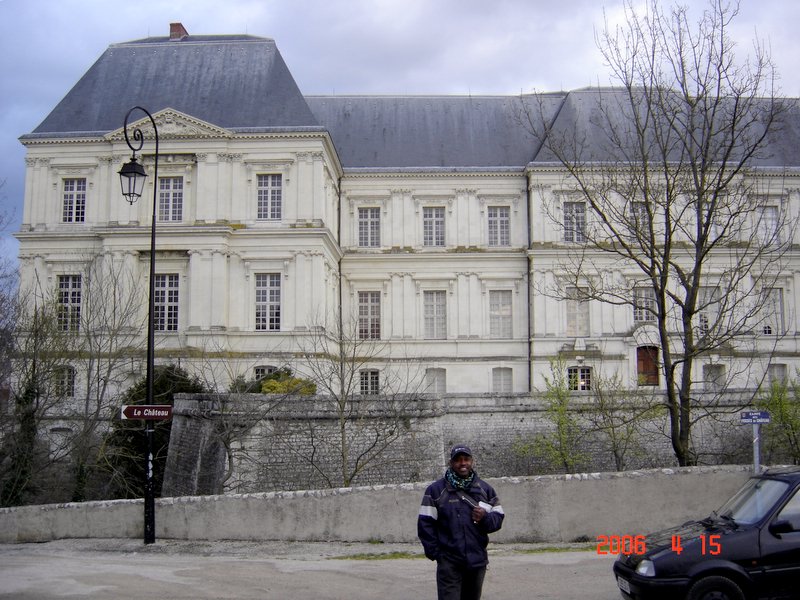
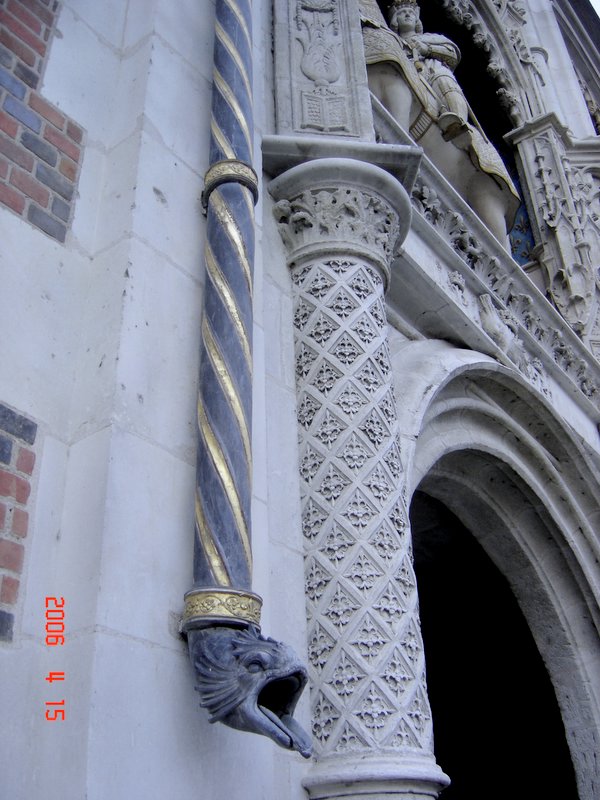
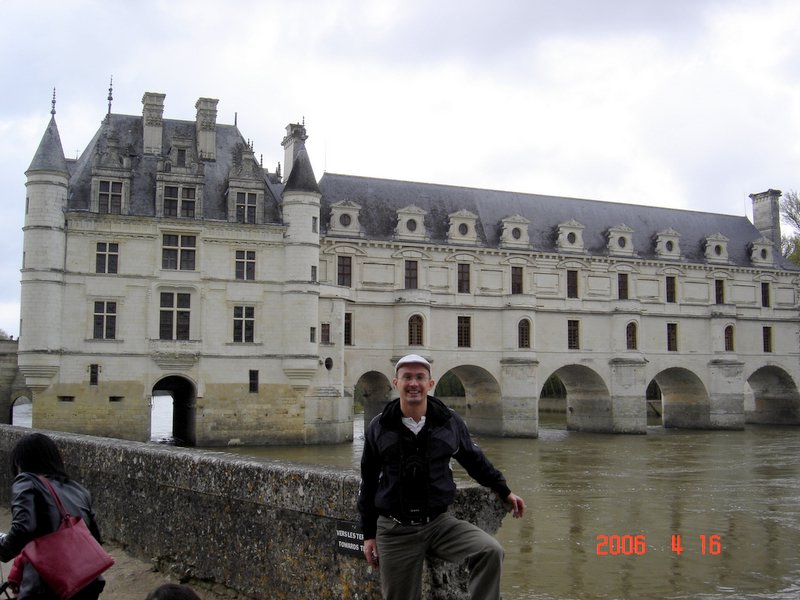
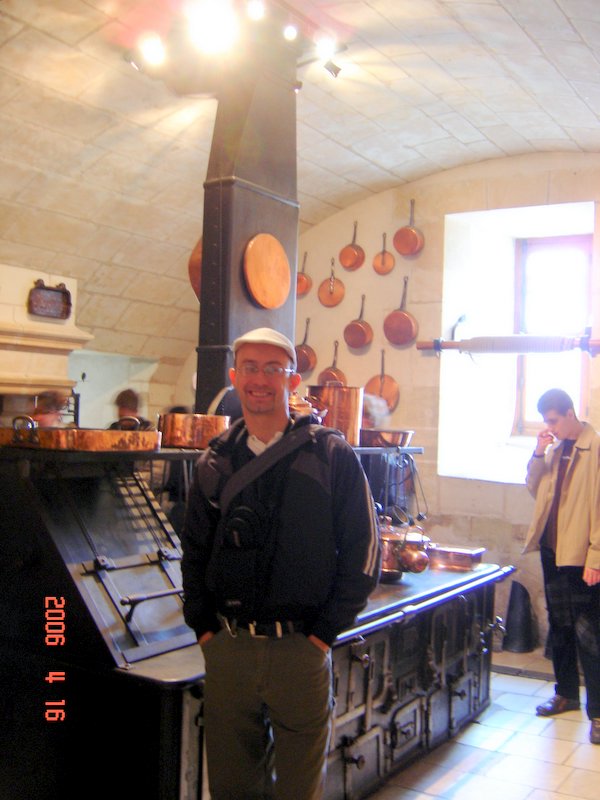
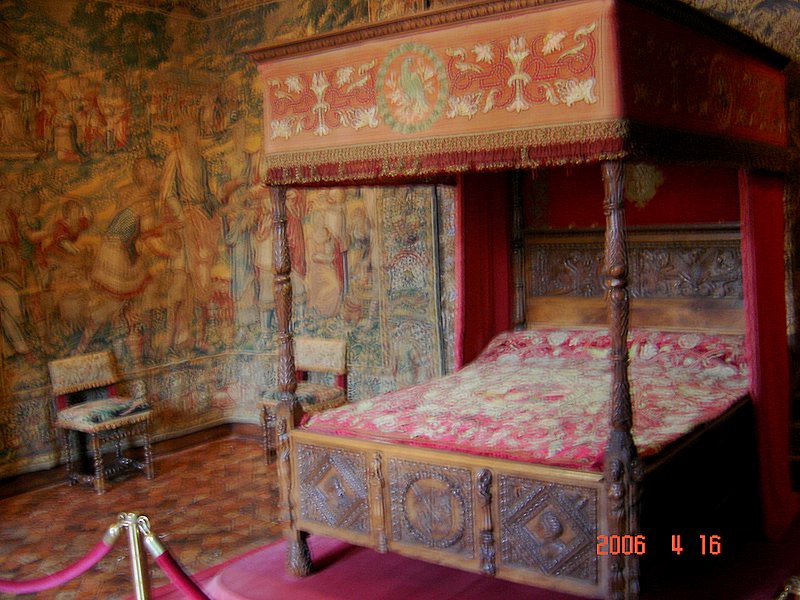
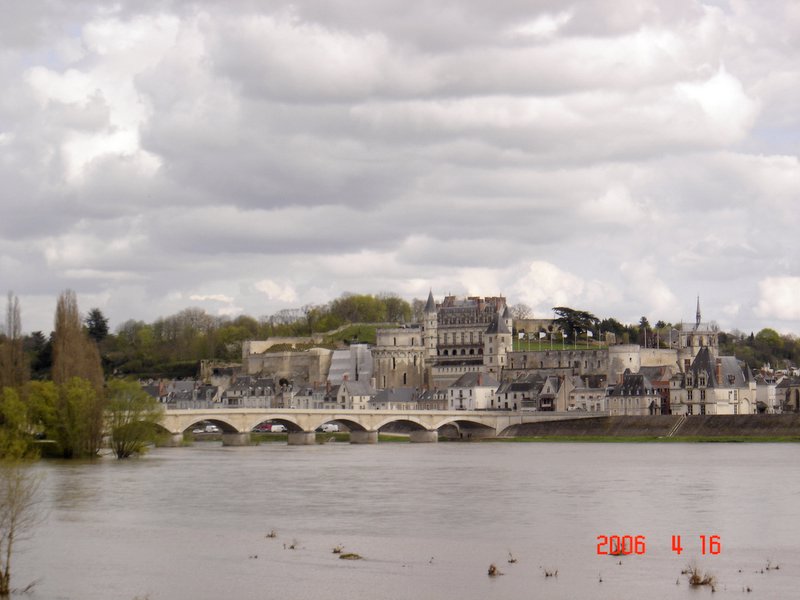
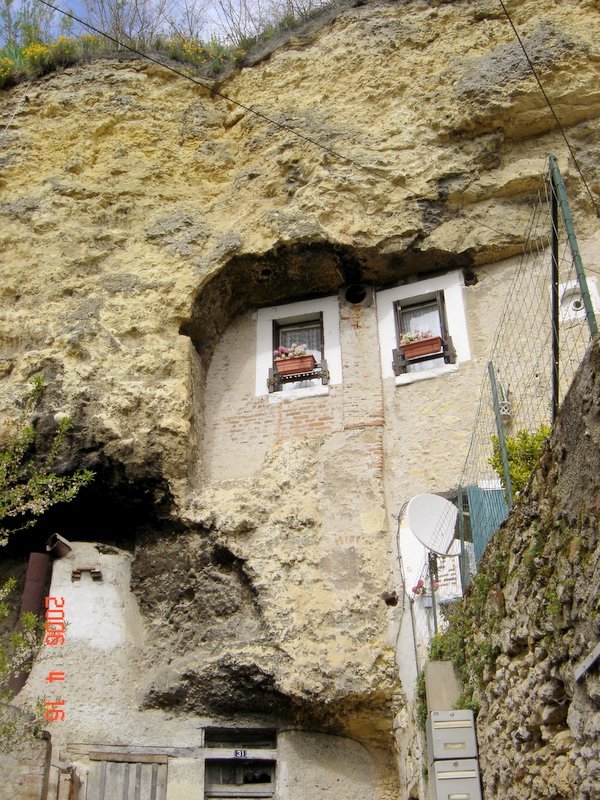
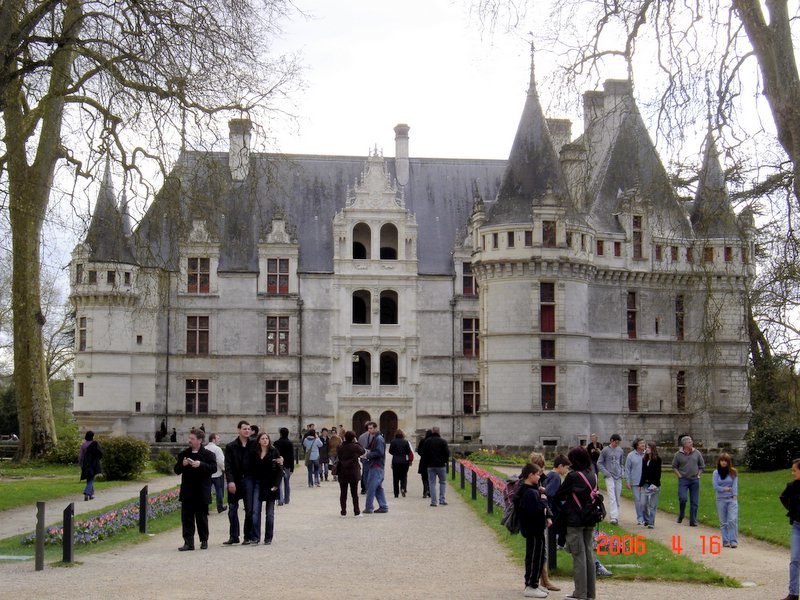
    Where else could it be better to celebrate Easter than in the Loire Valley, the original fairytale land and the Garden of France where both royal and land-tilling tradition form a gloriously enjoyable symbiosis. Majestic châteaux and abundance of fresh land produce – here you get the best of beauty and taste (culture and gastronomy).

    In this land of the Sleeping Beauty, Richard the Lionheart and Descartes, every turn of the road brings you back into your childhood fairy tales, school textbooks or favourite novels of youth. This was the playground of real and fictional characters belonging to the whole world’s heritage: Catherine de' Medici, Jeanne d'Arc, Gargantua and Pantagruel. Here Jules Verne was writing his pioneering science fiction, Marcel Proust was trundling the Guermantes Way, Cardinal Richileu was born and Leonardo da Vinci died.

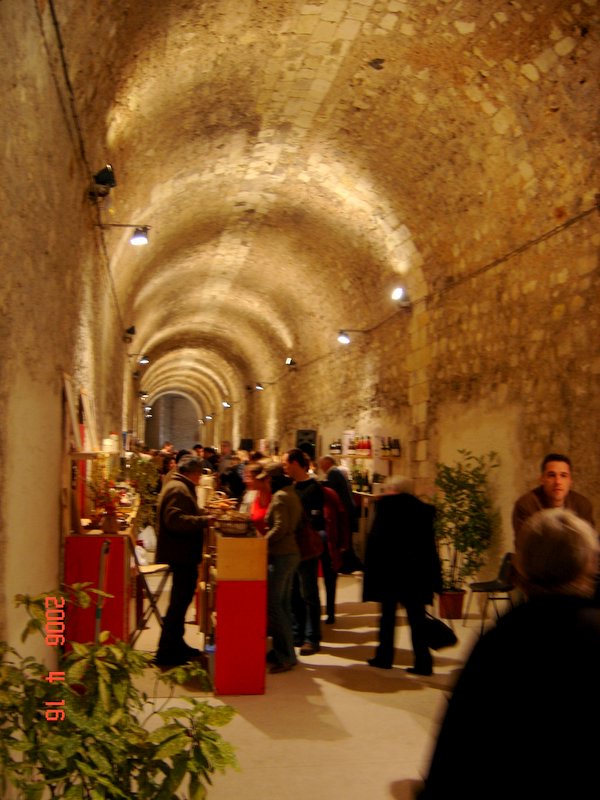
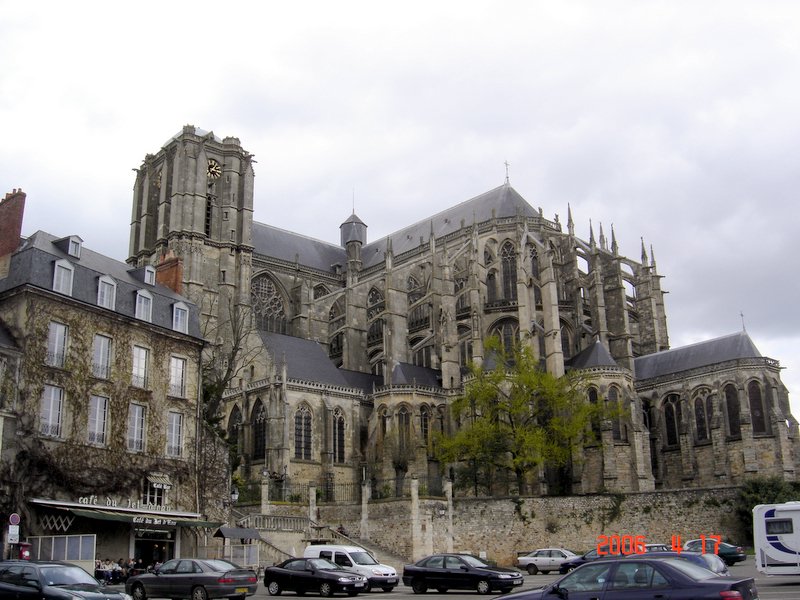
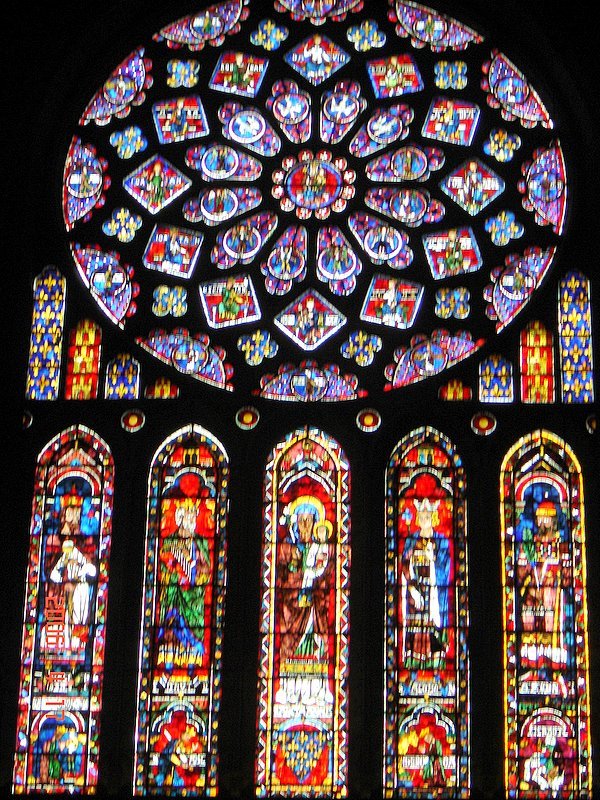
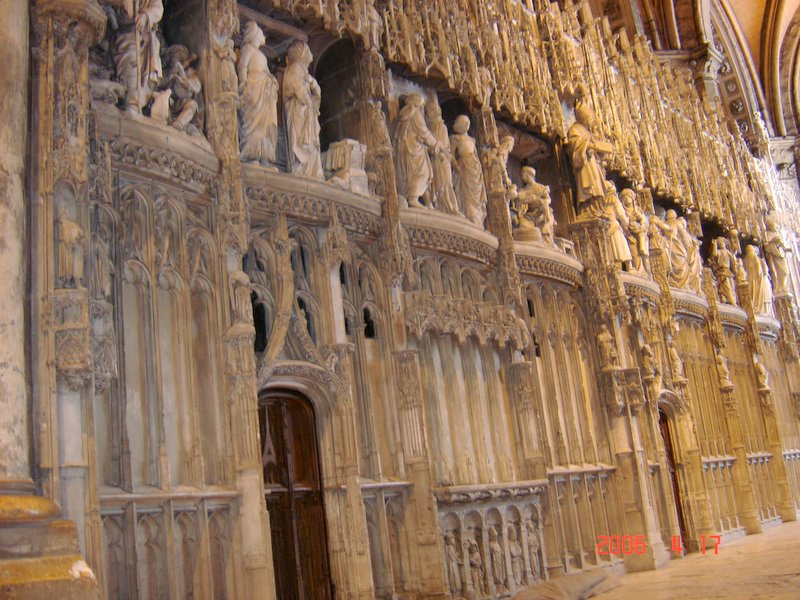
    With the prosperity brought by continuous royal presence, the Loire Valley is the likeliest the cradle of la doceur de vivre - that very quintessential French art of fine living. Madeleine cakes, Cointreau liqueur, Le Mans car races, tarte Tatin, the Chartres Cathedral, light-and-sound shows, Balzac's and George Sand's novels are just a few of the Loire Valley's contributions to the world. On the banks of the Loire, "the most sensous river of France", as Flaubert called it, a great variety of glorious wines is made. For those in the know: Muscadet, Vouvray, Anjou, Chinon and Pouilly-Fumé all hail from here, as well as Saumur, Sancerre and Bourgeuil.

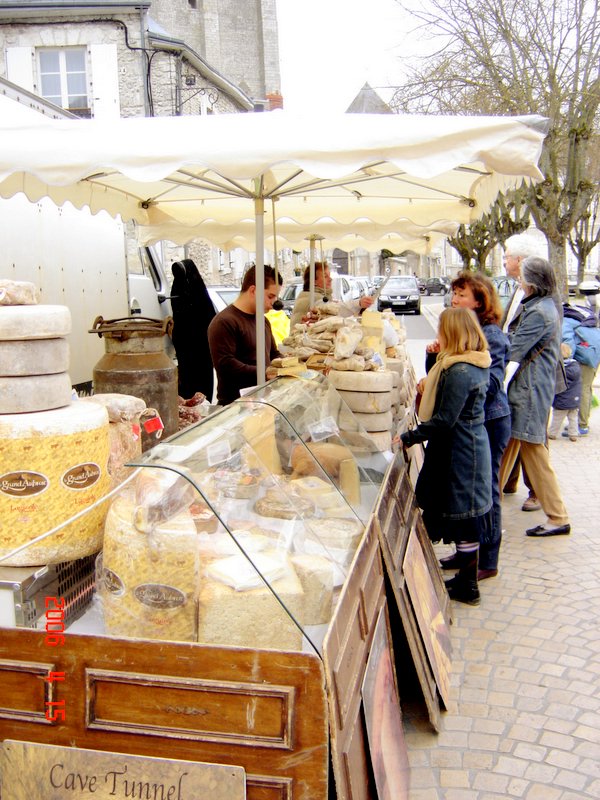
    Mild climate and fertile soils earned the Loire Valley the moniker of the Garden of France. It is famous for the abundance of high quality food produce: most fresh vegetable and mushrooms that end up on Parisians' tables originate here. What you buy in the supermarket as the champignon de Paris has most likely been grown in Anjou. Most famous cheeses here are made from goat's milk, like Crottins de Chavignol, served grilled on a bed of lettuce, but my personal favourite, the sinfully decadent, runny Selles-sur-Cher is based on cow’s milk.


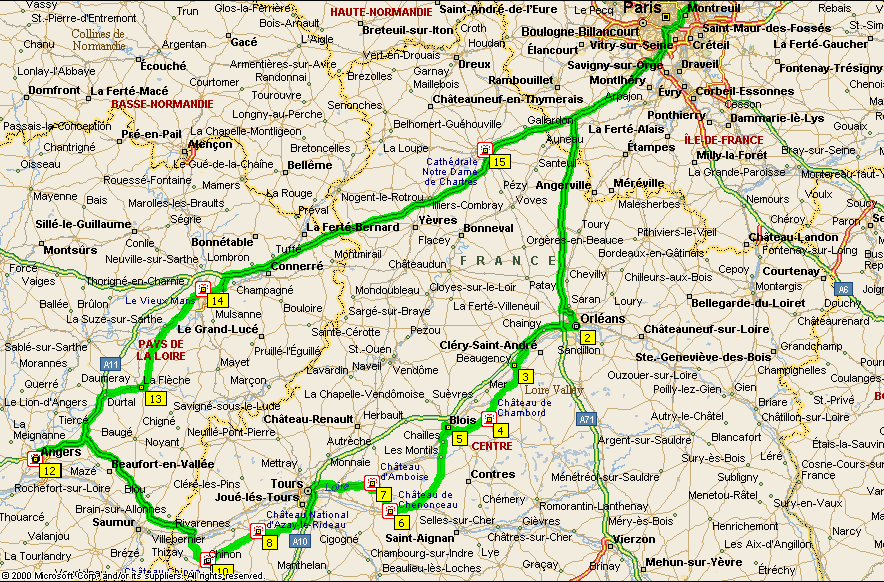
    Highlights of the trip
    :


    Posted by Picasa